
Many giving double-digit returns, with India up less than one per cent; even so, it has done much better than other emerging markets.

Fresh investments by corporates up just 5.8% in FY17, lowest since 1992

Nifty 50 firms' net profit estimated to grow by a modest 3.1% in Q2, reports Krishna Kant.

Tech Mahindra was the top loser in the Sensex pack, shedding over 3 per cent, followed by NTPC, IndusInd Bank, Kotak Bank and Reliance Industries. NSE Nifty fell 185.60 points to 17,671.65.

FIIs have offloaded stocks worth Rs 13,110 crore

This weakness is likely to continue in the near-term.

A full-blown recovery remained elusive for India Inc in the July-September quarter, even as it overcame the challenge of achieving profitable growth.

Reports have suggested Rs 400-650 as the possible IPO price

Higher crude oil prices also translate into better corporate earnings for India's top companies

That resulted in a 50-basis point improvement in operating profit margins on a sequential basis.

Fourteen per cent of the $16 billion invested by Ratan Tata in M&As abroad has been written off by his successor.

Slowdown and liquidity squeeze by RBI have put India's top 10 indebted firms in a tight spot. But they have a few options.

With cash -- the primary medium of exchange -- all but disappearing, it is now unlikely that the expected fillip to demand on account of a good monsoon and proceeds from the Seventh Pay Commission payout will materialise.
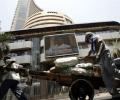
The banking, oil and metal sectors were the top sectoral losers on the BSE, while IT stocks rendered support at lower levels.

Many analysts find market expensive, even at current levels.


Check out some of the stocks that will react on the basis of their numbers in the near term.

The management, however, is a bit wary about near-term performance.

While most analysts remain positive on TCS and Infosys, they are cautious on Wipro.

Check out some of the stocks that will react on the basis of their numbers in the near term.

Lower IT exports will raise India's dependence on capital flows to fund imports.
.jpg)
Revenue yield on every rupee of investment fell to Rs 1.06 in FY13 from Rs 1.20 in FY08.

The gap between Nifty's price-earnings multiple and economic growth is at a 12-year high

In India, bond yields have fallen nearly 70 basis points in the last one year.

Softening rural consumption and the likelihood of weak corporate earnings in the March quarter saw investors dump stocks.

This was even as the country's economy grew by 7.3%.

Benchmark share indices gained for the fifth straight session on Thursday led by index heavyweight Reliance Industries.
Net profit grew 25.4% in Q4 but revenue growth, lower at 8.5%, suggests lack of volume expansion.

Earnings spread for foreign investors down to 10-year low of 1.1 per cent, from 2 per cent at the beginning of the year and record high of nearly 5 per cent in 2013
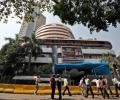
Stock prices is due to valuation expansion

Equity investors grew richer by Rs 32.49 lakh crore in 2020 on the back of smart returns in the stock market which had a roller-coaster ride during the year hit by the coronavirus pandemic. The COVID-19 outbreak ravaged lives and livelihoods on a global scale, shuttering businesses and jolting world equities. But amid all the gloom, Indian stock indices gave hope of returning to winning ways towards the latter part of the year.

Anaysts recommend a 'buy' on Icra due to its positive outlook.
Anaysts recommend a 'buy' on Icra due to its positive outlook.

Over the past four quarters, the Sensex companies' earnings trajectory has improved sharply because of a weak rupee.

Adani Enterprises plans to invest a total of $25 billion in the next five years.

The ruling BJP losing Chhattisgarh, Madhya Pradesh and Rajasthan, or being able to retain power only in Chhattisgarh may result in a "sharp correction" in the indices
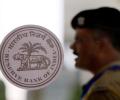
The windfall from RBI may be used to trim borrowing, help fund Rs 3.3 lakh crore capex plan, capitalise banks and provide fiscal stimulus to some stressed sectors, experts and economists said.

After unseasonal rains, supply disruptions and pandemic-induced woes pushed retail inflation well over the Reserve Bank's comfort zone in 2020, the scenario is likely to stay that way at least in the short term as economic recovery slowly gains foothold. For most part of this year, pricier food items pushed the retail inflation, based on Consumer Price Index (CPI), higher in the range of 6.58-7.61 per cent, except for March when the reading was 5.91 per cent. Experts believe retail inflation is likely to average around 6.3 per cent this fiscal and mostly will remain sticky going forward owing to pick-up in demand across sectors.

Kotak Bank was the top gainer in the Sensex pack, ending 4.31 per cent higher. PowerGrid, TCS, ICICI Bank, SBI, HCL Tech, NTPC, Infosys, Bajaj Finance, HDFC duo, ONGC, Vedanta and IndusInd Bank too rose up to 2.84 per cent.

Equity benchmark Sensex tumbled 674 points on Friday, weighed by losses in banking stocks as an unabated spike in new coronavirus cases fuelled uncertainty over the economic impact of the pandemic. After hitting a low of 27,500.79 during the day, the 30-share BSE barometer ended 674.36 points or 2.39 per cent lower at 27,590.95. The NSE Nifty shed 170 points, or 2.06 per cent, to finish at 8,083.80.
 © 2026 Rediff.com - Advertise with us - Disclaimer - Privacy Policy - Sitemap - Feedback - About us - Terms of use - Grievances